

Why is the icefish city important for Antarctica? This is the crucial question that scientists and conservationists are urgently addressing following the discovery of the world’s largest known fish breeding ground beneath the frozen, remote waters of the Weddell Sea. This colossal colony, nicknamed the “Icefish City,” was found to contain over 60 million active nests. It is truly the largest fish breeding aggregation ever described globally.
Beyond the jaw-dropping numbers and the sheer novelty of finding an aquatic ‘megacity’ in such an extreme environment, the implications of this discovery are massive. I believe that for too long, we have viewed the deep sea as a barren abyss with little life. This discovery shatters that outdated perception entirely. As someone who follows the latest scientific breakthroughs closely, I can say this find is a critical turning point for marine conservation, fundamentally reshaping our understanding of the Southern Ocean’s ecosystem. It’s a testament to the fact that even in the planet’s harshest corners, life not only survives but thrives on an unimaginable scale.
The Phenomenon: What Exactly is the Icefish City?
The colony was discovered by the German research vessel RV Polarstern. They used an autonomous underwater vehicle named ‘Lassie‘ for this groundbreaking exploration.
The colony belongs to the Jonah’s Icefish (Neopagetopsis ionah). These fish build their nests as circular depressions on the seafloor. Each nest is carefully guarded by a single adult icefish.
This ‘city’ stretches across a vast area of approximately 240 square kilometres—roughly the size of a major urban centre. This scale confirms that this species engages in highly synchronized, communal breeding, a behaviour previously only speculated in this region. This vast breeding ground is precisely one reason why is the icefish city important for Antarctica?
The Top 3 Reasons Why is the Icefish City Important for Antarctica?
The significance of this ‘city’ extends far beyond just counting the nests. Its importance can be primarily understood through three vital lenses: its Ecological Role, its urgent Conservation Status, and its Evolutionary Uniqueness.
1. The Icefish City as a Foundational Ecological Hub
The colony is much more than a breeding ground; it is a massive, concentrated, and predictable food source that actively supports a wider Antarctic food web.
Supporting Top Predators
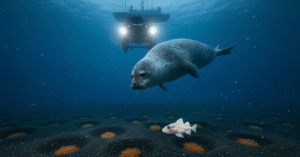
Researchers have observed that Weddell Seals, one of the Southern Ocean’s most important marine mammals, frequently dive repeatedly to the exact depth of these nests.
This suggests that the nesting icefish are a vital, predictable food source for these top predators. Without this massive, reliable breeding hub, the local seal population would likely struggle to sustain itself throughout the year.
Nutrient Cycling and Ecosystem Productivity
The sheer biomass of over 60 million fish actively breeding plays an enormous role in nutrient distribution and cycling on the seafloor. This high-density biological activity is a powerful engine driving the overall health of the local deep-sea environment. Understanding this ecological role is key to answering why is the icefish city important for Antarctica?
2. The Critical Push for Marine Conservation
Perhaps the most practical reason for answering the question, why is the icefish city important for Antarctica?, is its use as indisputable evidence to create a much-needed Marine Protected Area (MPA).
A Strong Case for Protection
The scale and absolute uniqueness of this discovery provide irrefutable evidence that this specific area of the Weddell Sea requires immediate, permanent protection from human activities.
Scientists have already put forward a proposal to designate the region as an MPA. This designation would safeguard the area from destructive activities like deep-sea bottom fishing and potential mineral exploration. Securing this protection is crucial for the future of the species.
A Window into Climate Resilience
This pristine ecosystem is located in one of the most stable parts of the Weddell Sea. Studying it can offer crucial baseline data on how marine life should function without major human interference. This resilience and stability further highlight why is the icefish city important for Antarctica? for scientific research.
3. The Evolutionary Marvel: Transparent Blood
To fully grasp the uniqueness of this ‘city’, one must appreciate the icefish itself as an individual organism. It is truly one of nature’s greatest evolutionary marvels.
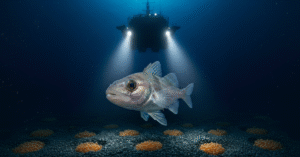
The icefish is the only known vertebrate (animal with a backbone) to completely lack haemoglobin—the red protein that carries oxygen in the blood of almost all other vertebrates.
This is the reason their blood is perfectly clear and transparent. They have evolved to absorb sufficient oxygen directly through their highly permeable skin and large gills from the incredibly cold and oxygen-rich Antarctic water.
Conclusion: My Experience and the Future of FACTOVATE
In my experience of compiling facts and knowledge, the ‘Icefish City’ stands out as a genuine world-changer. It’s a powerful reminder of how much of our own planet remains unexplored—less than 0.001% of the deep seafloor has been visually observed.
This latest fact perfectly illustrates why is the icefish city important for Antarctica?—it’s important because it forces us to reconsider the value and absolute vulnerability of the deep ocean.