
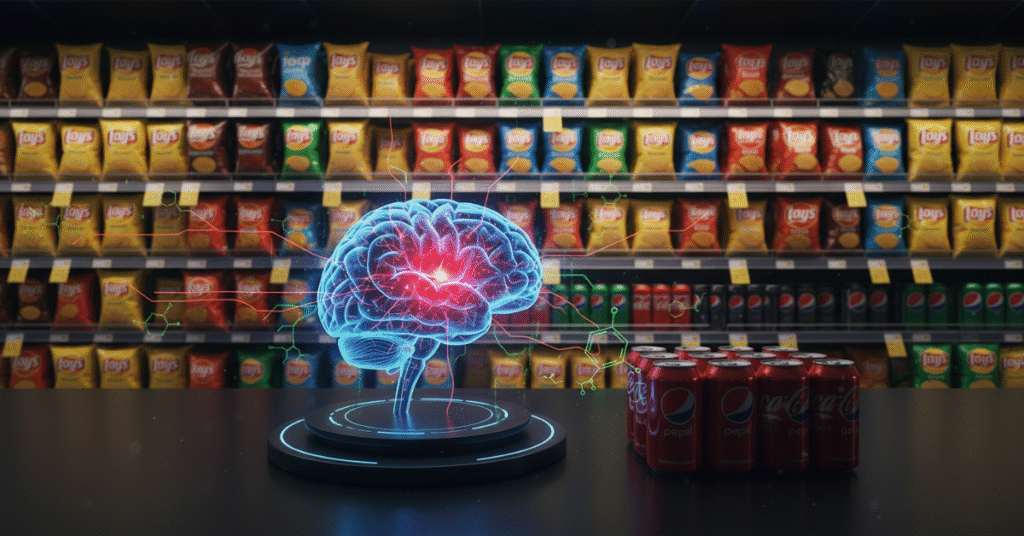
It’s a chilling thought: the quick, colorful snacks we grab at the store are systematically changing our brains. The science is now undeniable. If you’ve ever wondered how ultra-processed foods rewire the brain and seem to trap you in a cycle of overeating, you’re not alone. I’ve personally felt that powerful craving—that magnetic pull towards another bag of chips or a sugary drink, even when I know I’m not truly hungry. This isn’t a lack of willpower; it’s a biological manipulation by food science. New, massive brain imaging studies, including one involving nearly 30,000 people, confirm that these modern convenience foods are physically altering the structure of the human brain.
The Dark Secret of Ultra-Processed Foods (UPFs)
Ultra-Processed Foods (UPFs) are not just “junk food.” They are industrial formulations that contain ingredients rarely found in a home kitchen, such as emulsifiers, flavor enhancers, and chemically modified starches. Their defining feature is their extreme palatability—a scientist’s term for that irresistible, melt-in-your-mouth quality that hits the “bliss point” of sugar, fat, and salt. But the true danger is in how this formulation interacts with your neurological system. Understanding how ultra-processed foods rewire the brain is the first step toward reclaiming control of your diet.
The Chemical Attack on Brain Structure
The most recent research reveals that high consumption of UPFs is associated with measurable structural changes in the brain. Specifically, these changes are seen in areas responsible for critical functions:
- The Hypothalamus: This is the brain’s central control hub for hunger and satiety (the feeling of fullness). UPFs seem to damage the cellular density in this region, confusing the body’s natural signals.
- The Nucleus Accumbens: This is a key part of the brain’s reward circuit. Just like addictive substances, UPFs activate this area so intensely that it forces the brain to prioritize eating them over everything else. The immediate, intense pleasure dulls the brain’s sensitivity, requiring more and more food to get the same “reward.” This process is directly connected to how ultra-processed foods rewire the brain for addiction.
- The Amygdala and Hippocampus: These areas manage emotional regulation and memory. Alterations here can weaken the brain’s ability to resist cravings and associate UPFs with positive, compulsive memories.
The Vicious Cycle: From Convenience to Compulsion

Understanding how ultra-processed foods rewire the brain is key to breaking the cycle. The structural and chemical changes create a self-reinforcing loop that drives overeating, regardless of your body’s true nutritional needs. It’s vital to recognize that this is a neurological issue, not a personal failing.
The Gut-Brain Axis is Disrupted
UPFs are notoriously low in fiber and nutrients but high in additives. This poor composition harms the healthy bacteria in your gut (the microbiome). Science shows a powerful, two-way link (the gut-brain axis) between the gut and the brain. When the gut is unhealthy, it sends inflammatory signals to the brain. This neuroinflammation is one of the proposed mechanisms by which UPFs contribute to cognitive decline and further disrupt the brain’s regulatory systems. Scientists are actively researching the precise mechanisms of how ultra-processed foods rewire the brain via the gut.
The Hidden Dangers Beyond Calories
Many people assume the only problem with UPFs is their high calorie count, leading to obesity. However, the latest studies show that the negative changes in the brain’s structure and function happen independent of obesity. This means you don’t have to be overweight for ultra-processed foods to be quietly damaging your brain. The chemicals and additives themselves are active neurological disruptors. This is a crucial detail that most older articles miss, but our focus is always on the latest, most accurate facts about how ultra-processed foods rewire the brain.
The Role of Specific Ingredients
Scientists are specifically looking at common UPF ingredients:
- Emulsifiers: These are added to keep products from separating (like in ice cream or sauces). Initial research suggests they might directly affect the gut lining, promoting inflammation that travels to the brain.
- Advanced Glycation End Products (AGEs): These toxic compounds form when foods are cooked at high temperatures (a common process in UPF manufacturing). AGEs are linked to oxidative stress and neurodegeneration.
My Personal Takeaway and Conclusion
As someone who writes about facts, I have learned a powerful lesson: this is a public health issue, not a personal weakness issue. When you realize how ultra-processed foods rewire the brain, you stop blaming yourself for a strong craving and start focusing on making better choices. For FACTOVATE, the simple fact is this: limiting your intake of foods with long, complex ingredient lists is perhaps the most important defense against cognitive decline and the cycle of overeating. It’s time to choose whole, minimally processed foods that nurture, rather than manipulate, our most vital organ—the brain. This is the truth, backed by the largest and most current scientific evidence available.





Your point of view caught my eye and was very interesting. Thanks.